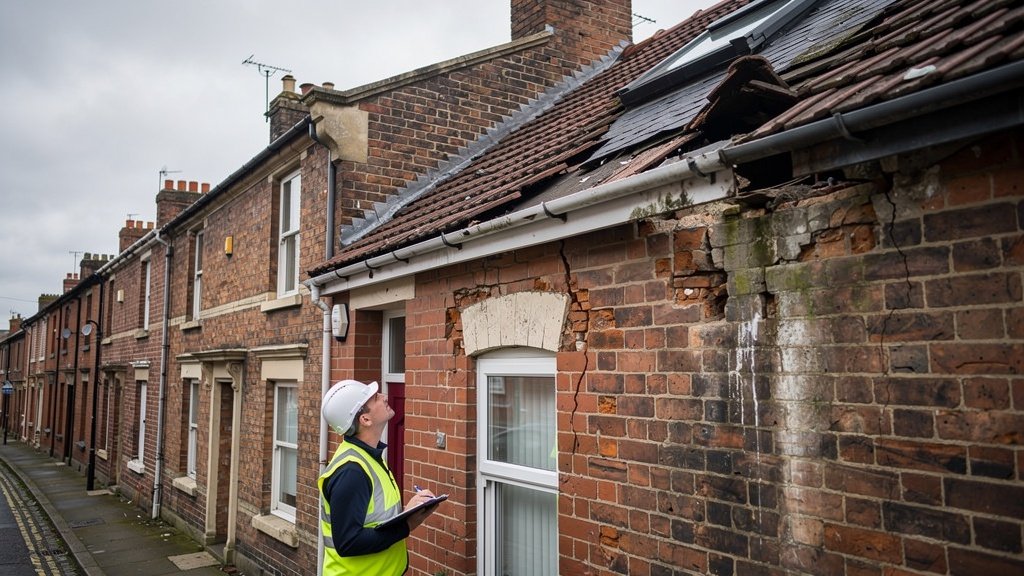
After carrying out hundreds of housing disrepair surveys across the UK, our team at Disrepair Claim Surveyors has seen the full spectrum of disrepair issues — from the common to the catastrophic. In this article, we're sharing a practical, plain-English guide to the most common areas of disrepair we encounter in rented properties, what causes them and why landlords are legally required to fix them.
Understanding what constitutes housing disrepair — and which defects fall under the landlord's legal repairing obligations — is the first step for any tenant considering a housing disrepair survey or claim.
1. Damp and Mould
Damp and mould is far and away the most common housing disrepair issue in the UK rented sector. According to the English Housing Survey, approximately one in 20 rented homes has a problem with damp — a significant undercount, since many cases go unreported.
There are three main types: rising damp (moisture travelling up from the ground through structural defects), penetrating damp (moisture entering through the building envelope) and condensation mould (caused by warm, moist air meeting cold surfaces). All three can be caused — or worsened — by structural defects that are the landlord's responsibility to fix.
2. Defective or Broken Heating Systems
A broken boiler or defective central heating system is one of the most commonly reported disrepair issues, particularly during winter months. Under Section 11 of the Landlord and Tenant Act 1985, landlords are required to keep space heating and water heating installations in repair and proper working order. Failure to do so — particularly over an extended period — is a clear breach of the landlord's statutory duty.
We regularly see cases where tenants have been left without heating for weeks or even months while landlords delay repairs. These cases are often amongst the most straightforward to pursue as housing disrepair claims, because the defect and its impact are easy to document.
3. Structural Defects
Structural issues — including cracking, subsidence, failing lintels, defective roof structures and collapsing ceilings — fall squarely within the landlord's repairing obligations under Section 11. These can range from relatively minor cosmetic cracks to serious structural instability.
Our RICS Level 3 surveyors are trained to distinguish between cosmetic cracking (which is not a structural concern) and crack patterns that indicate structural movement — such as stepped diagonal cracking in brickwork, which can indicate differential settlement. Documenting the nature and extent of structural defects is a key part of our housing disrepair surveys.
4. Roof Defects
Defective roofing is a common finding in housing disrepair surveys — particularly in older properties with ageing tile or slate coverings. Missing or broken tiles, failed flat roof membranes, defective flashings and leaking valleys can all allow water to penetrate the building, causing internal damp and damage to ceilings, walls and floors. The landlord is responsible for keeping the roof in repair.
5. Defective Gutters and Drainage
Blocked, broken or leaking gutters and downpipes are surprisingly common — and surprisingly consequential. When gutters overflow, water saturates the adjacent brickwork, leading to penetrating damp in the walls below. A simple gutter repair can resolve what appears to be a major damp problem. Under Section 11, gutters and external pipes fall within the landlord's repairing obligations.
6. Defective Windows and Doors
Failed window seals, rotten frames, broken hinges and defective locks are frequent housing disrepair findings. Beyond the obvious issues of draughts, heat loss and security risks, failed window seals often contribute to condensation problems — and in some cases, to penetrating damp. The landlord is legally required to keep windows and external doors in repair.
7. Sanitation Issues
Defective plumbing — leaking pipes, blocked drains, faulty toilets and defective baths or showers — falls within the landlord's Section 11 obligations. Sanitation issues can have serious hygiene implications and, if not addressed, can cause significant water damage to the fabric of the property.
8. Electrical Defects
Electrical defects — exposed wiring, faulty sockets, inadequate earthing — are less commonly the subject of housing disrepair surveys, but they are covered by the landlord's repairing obligations where they affect the installations for the supply of electricity. Safety hazards from electrical defects can also support a fitness for human habitation claim under the 2018 Act.
What to Do If You Spot These Defects
If you're a tenant and you've spotted any of the defects described above:
- Report them to your landlord in writing immediately
- Keep a record of all communications
- Take dated photographs of the defects
- If the landlord doesn't act, contact a housing disrepair solicitor and request a professional survey
A housing disrepair survey from Disrepair Claim Surveyors will identify every area of disrepair and produce the expert evidence your solicitor needs to pursue a claim.