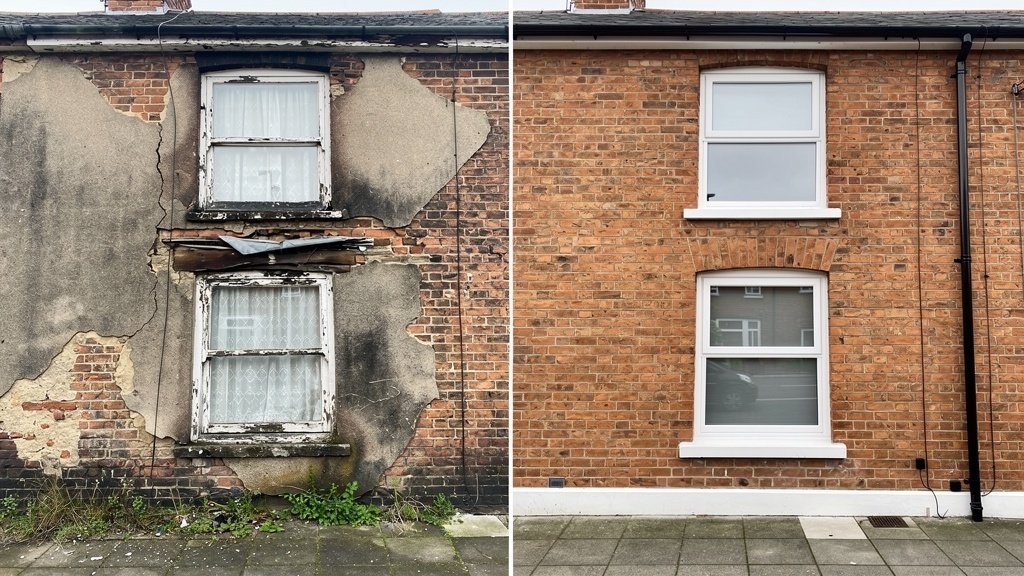
In March 2019, the Homes (Fitness for Human Habitation) Act 2018 came into force — and it fundamentally changed the landscape for tenants living in substandard conditions. For the first time, tenants in England had a direct right to sue their landlord in court if a property was unfit for human habitation, regardless of whether the landlord had been formally notified of a specific defect.
At Disrepair Claim Surveyors, we've seen how this law has transformed housing disrepair claims. Properties that might previously have fallen into grey areas — where the landlord argued they hadn't been notified of a problem — can now form the basis of claims simply because the property itself was in an unacceptable condition. In this guide, we explain what the Act says, what it means in practice and how a housing disrepair survey fits in.
What Did the Law Say Before 2018?
Before the Act, tenants' main legal protection came from Section 11 of the Landlord and Tenant Act 1985. This placed repairing obligations on landlords, but required tenants to prove:
- That a specific defect existed
- That the landlord had been notified of that defect
- That the landlord had failed to carry out repairs within a reasonable time
This was fine for some situations, but it left many tenants struggling to prove their case — particularly where the disrepair was the result of the building's general condition rather than a specific reportable defect.
What the 2018 Act Changed
The Homes (Fitness for Human Habitation) Act 2018 inserted new sections into the Landlord and Tenant Act 1985 — specifically Sections 9A to 9C. These sections require landlords to ensure that residential properties are fit for human habitation at the start of the tenancy and throughout its duration.
Crucially, unlike Section 11, there is no requirement for the tenant to have notified the landlord of a specific defect. If the property is unfit for human habitation — for whatever reason — the landlord is liable. The tenant can apply to the county court for an order requiring the landlord to carry out works and/or for damages.
What Makes a Property Unfit for Human Habitation?
The Act refers to the Housing Health and Safety Rating System (HHSRS) — a risk-based assessment framework used by local authorities to evaluate the potential hazards in a property. If any HHSRS hazard is present in the property and makes it unsafe or unsuitable for occupation, it could be considered unfit for human habitation.
Common HHSRS hazards that feature in housing disrepair cases include:
- Damp and mould growth — respiratory illness risks
- Excess cold — cardiovascular and respiratory risks
- Structural collapse — falling ceilings, unstable walls
- Electrical hazards — faulty wiring, exposed conductors
- Falls on stairs — broken bannisters, defective treads
- Entry by intruders — broken doors or windows
How Does a Housing Disrepair Survey Support an Act 2018 Claim?
A professional housing disrepair survey from Disrepair Claim Surveyors provides the independent expert evidence needed to demonstrate that a property is — or was — unfit for human habitation. Our surveys document:
- Every HHSRS hazard present in the property
- The nature and extent of each hazard
- The risk that each hazard poses to occupants' health and safety
- The remedial works required to address each hazard
This expert evidence, presented in a comprehensive report, gives your solicitor the ammunition they need to bring a successful claim under the 2018 Act — whether as part of a housing disrepair claim for specific performance or as a claim for damages.
Does the Act Apply to Housing Associations and Social Housing?
Yes. The Homes (Fitness for Human Habitation) Act 2018 applies to housing associations, local authorities and other social landlords in exactly the same way as it applies to private landlords. Tenants in social housing have exactly the same rights under the Act as tenants in privately rented properties.
"The 2018 Act is a powerful tool for tenants. But it only works if you have the right expert evidence. A thorough housing disrepair survey is often the foundation of a successful claim under the Act." — Disrepair Claim Surveyors
What About Awaab's Law?
In November 2022, a coroner's inquest concluded that Awaab Ishak — a two-year-old boy from Rochdale — died as a result of prolonged exposure to mould in his social housing flat. The coroner's findings prompted the government to introduce Awaab's Law as part of the Social Housing (Regulation) Act 2023.
Awaab's Law requires social landlords to investigate damp and mould complaints within specified timeframes and carry out remediation works within strict deadlines. While this law currently applies only to social housing, it signals the direction of travel — and reinforces why damp and mould in rented properties is such a serious issue.