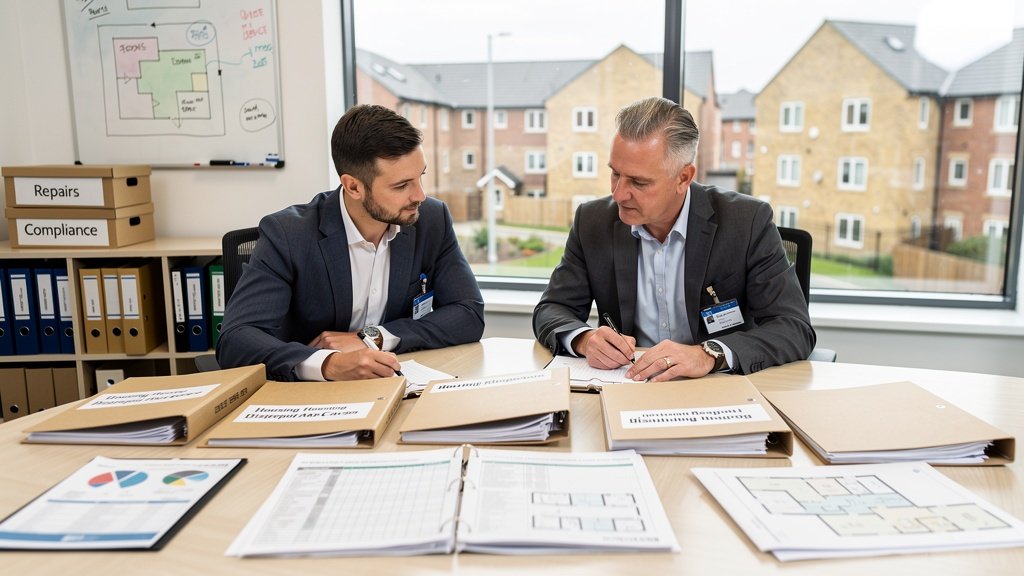
Housing associations manage approximately 2.7 million homes in England alone. They play a crucial role in providing affordable housing — but they are not immune to the problems that affect all rented housing: damp and mould, structural issues, broken heating systems and defective sanitation. When a housing association fails to keep its properties in good repair, its tenants have the same legal rights as tenants in the private rented sector.
At Disrepair Claim Surveyors, we carry out housing disrepair surveys for housing associations, local authorities and social housing providers. We also produce expert evidence for tenants bringing housing disrepair claims against their housing association. In this guide, we explain everything tenants in social housing need to know.
Do Housing Associations Have the Same Legal Obligations as Private Landlords?
Yes — absolutely. Housing associations are subject to exactly the same legal obligations as private landlords when it comes to the condition of their properties. This includes:
- Section 11 of the Landlord and Tenant Act 1985 — requiring landlords to keep the structure, exterior and installations of the property in repair
- The Homes (Fitness for Human Habitation) Act 2018 — requiring properties to be fit for human habitation at the start of and throughout the tenancy
- The Decent Homes Standard — a government framework that sets minimum standards for social housing
In fact, housing associations face additional scrutiny because they are regulated by the Regulator of Social Housing, which has the power to intervene if a housing association is not meeting its legal obligations. Recent regulatory action against several large housing associations following the Awaab Ishak case has raised the profile of housing disrepair in the social housing sector significantly.
The Decent Homes Standard
The Decent Homes Standard is a government policy framework that sets out the minimum standard for social housing in England. Under the standard, a property must:
- Meet the current minimum statutory standard for housing
- Be in a reasonable state of repair
- Have reasonably modern facilities and services
- Provide a reasonable degree of thermal comfort
Our surveyors assess housing against the Decent Homes Standard as part of our survey process. If a property fails to meet the standard, this can support both a regulatory complaint to the housing association and a formal disrepair claim.
Common Disrepair Issues in Social Housing
From our experience carrying out housing disrepair surveys across the UK, the most common disrepair issues in social housing include:
- Damp and mould — often in older housing stock with inadequate insulation or ventilation
- Defective boilers and heating systems — leaving tenants without adequate heating, particularly in winter
- Structural defects — cracks, subsidence, failing concrete in system-built properties
- Broken windows and doors — compromising security and causing draughts
- Defective drainage and sanitation — blocked drains, leaking pipes, malfunctioning toilets
- Pest infestations — often linked to structural defects or poor waste management
What to Do If Your Housing Association Won't Fix Disrepair
- Report in writing: Always report disrepair to your housing association in writing. Keep copies of all correspondence, including any responses.
- Make a formal complaint: If your housing association fails to act, make a formal complaint under their complaints procedure. Most housing associations are required to acknowledge complaints within a specified timescale.
- Refer to the Housing Ombudsman: If the housing association doesn't resolve your complaint satisfactorily, you can refer it to the Housing Ombudsman. The Ombudsman can order housing associations to carry out repairs and pay compensation.
- Seek legal advice: If the situation persists, contact a solicitor specialising in housing disrepair. They can advise you on your legal options, including bringing a claim under the Landlord and Tenant Act 1985 or the Fitness for Human Habitation Act 2018.
- Instruct a housing disrepair survey: An expert housing disrepair survey from Disrepair Claim Surveyors provides the independent expert evidence your solicitor needs to support a formal claim.
Awaab's Law and Social Housing
The tragic death of Awaab Ishak — a two-year-old boy whose death was linked to prolonged exposure to mould in his Rochdale housing association flat — led to significant legislative change. Awaab's Law, introduced through the Social Housing (Regulation) Act 2023, requires social landlords to:
- Investigate damp and mould reports within 14 days
- Begin remediation works within seven days where there is an emergency
- Complete repairs within the specified timeframes
This law gives social housing tenants stronger rights and places housing associations under greater pressure to act promptly on disrepair reports.
"Tenants in social housing have exactly the same rights as those in private rented properties. If your housing association is failing to keep your home in a good state of repair, you have every right to seek expert advice and, if necessary, to bring a formal claim." — Disrepair Claim Surveyors
How Our Housing Disrepair Surveys Help Social Housing Tenants
We have extensive experience carrying out housing disrepair surveys in social housing — including council properties, housing association homes and other social rented accommodation. Our surveys provide the independent expert evidence that solicitors and courts rely on when assessing housing disrepair claims.
If you're a tenant in social housing who has been living with disrepair issues that your housing association won't fix, please get in touch with Disrepair Claim Surveyors. We respond to all enquiries within one business day.