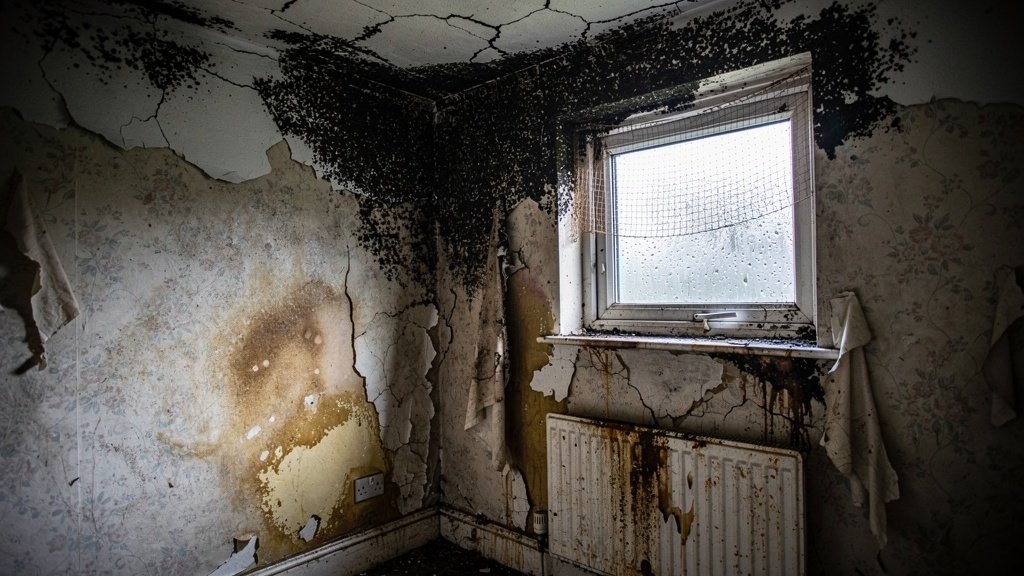
Damp and mould. Most people have seen it — that creeping black tide along a bedroom wall, the persistent musty smell, the dark rings on the bathroom ceiling that keep coming back no matter how many times you clean them. It is one of the most common housing disrepair issues in the UK rented sector, and yet it is also one of the most frequently ignored by landlords who ought to know better.
At Disrepair Claim Surveyors, we see damp and mould in rented properties almost every week. We've inspected properties where children have grown up breathing mould spores for years, where entire walls are black with fungal growth, and where landlords have responded with nothing more than a tin of paint and a shrug. If any of that sounds familiar, this guide is for you.
Why Damp and Mould Are a Serious Problem
Damp and mould are not just unsightly. They have serious implications for health, particularly for:
- Children under five and the elderly
- People with respiratory conditions such as asthma
- Anyone with a compromised immune system
- Pregnant women
Black mould — technically Stachybotrys chartarum — produces mycotoxins that can cause respiratory infections, allergic reactions, skin irritation and, in severe cases, more serious health conditions. Research published in the Journal of Allergy and Clinical Immunology has linked early childhood exposure to mould with significantly increased rates of asthma. The death of Awaab Ishak, a two-year-old boy in Rochdale whose death was linked to mould exposure in a housing association flat, shocked the UK and led to what is now known as Awaab's Law — new regulations requiring social landlords to investigate and fix damp and mould within strict timeframes.
What Does the Law Say?
UK landlords are not simply expected to keep their properties in good condition — they are legally required to. Several pieces of legislation are relevant here:
The Landlord and Tenant Act 1985 — Section 11
Section 11 of the Landlord and Tenant Act 1985 imposes a statutory duty on landlords of residential properties to keep:
- The structure and exterior of the property in repair
- The installations for water, gas, electricity and sanitation in repair and proper working order
- The heating installations in repair and proper working order
This means that if damp is caused by a structural defect — a failing roof, cracked render, blocked guttering or defective damp-proof course — the landlord is legally responsible for fixing it under Section 11. However, Section 11 comes with an important caveat: the landlord must have been notified of the problem and given a reasonable opportunity to fix it before a claim can be brought.
The Homes (Fitness for Human Habitation) Act 2018
The Homes (Fitness for Human Habitation) Act 2018 — sometimes called the Human Habitation Act — strengthened tenants' rights considerably. Under this Act, landlords must ensure that their properties are fit for human habitation at the start of the tenancy and throughout its duration.
The Act lists specific hazards that can make a property unfit for human habitation, including damp and mould growth. Crucially, it allows tenants to take action in the county court if a property is not fit for human habitation — without needing to prove that the landlord was at fault or that they had been notified of the problem.
"A property cannot be considered fit for human habitation if it contains damp and mould that poses a risk to the health and safety of its occupants. The 2018 Act gives tenants a powerful new tool to force landlords to act." — Disrepair Claim Surveyors
Types of Damp: What Our Surveyors Look For
Not all damp is the same, and correctly identifying the type of damp is essential for a successful housing disrepair claim. Our surveyors are trained to identify and document the following types:
Rising Damp
Rising damp occurs when moisture from the ground travels upwards through the walls via capillary action. It typically affects the lower sections of external walls and is often identified by tidemark staining, salt deposits and plaster damage at low level. Rising damp usually indicates a failed or absent damp-proof course — a structural issue the landlord is legally obliged to address.
Penetrating Damp
Penetrating damp enters through defects in the external envelope of the building — cracked render, damaged pointing, leaking roofs or faulty guttering. It can appear anywhere on the walls or ceilings and often presents as patches that are wet after rainfall. Like rising damp, penetrating damp is typically caused by structural defects that fall under the landlord's repairing obligations.
Condensation Mould
Condensation mould is the most common type in modern properties. It occurs when warm, moist air comes into contact with cold surfaces. It typically affects corners, north-facing walls, behind furniture and around windows. While landlords sometimes argue that condensation mould is caused by tenant behaviour, our surveyors have repeatedly found that the true cause is inadequate heating, poor insulation or insufficient ventilation — all of which are the landlord's responsibility to address.
How a Housing Disrepair Survey Can Help
If you're dealing with damp and mould in a rented property and your landlord isn't taking action, a professional housing disrepair survey from Disrepair Claim Surveyors can make a real difference. Here's why:
- Independent expert evidence: Our surveyors are entirely independent. Our reports reflect what we find — not what either party wants to hear.
- Technical analysis: We use moisture meters, thermal imaging cameras and hygrometers to identify the type, source and extent of damp. This technical evidence is far more convincing in a legal context than photographs alone.
- Legal compliance: Our reports comply with the Pre-Action Protocol for Housing Conditions Claims and, where required, with Part 35 of the Civil Procedure Rules. They can be used directly as evidence in legal proceedings.
- Repair schedule: We provide a clear schedule of required repairs and an estimated cost, giving you and your solicitor a concrete basis for your claim.
Case example: We recently surveyed a three-bedroom terraced property in Wolverhampton where a family had been living with severe black mould for over three years. Our thermal imaging survey identified penetrating damp from a defective roof and failed window seals — both the landlord's responsibility. The report supported a successful disrepair claim, resulting in the landlord carrying out full remediation and the tenant receiving compensation for inconvenience and health impact.
What Should You Do If You Have Damp and Mould?
Here's a practical step-by-step guide:
- Report it in writing: Always notify your landlord in writing (email or letter) as soon as you discover damp or mould. Keep copies of all correspondence.
- Document everything: Take dated photographs of all affected areas. Note any health symptoms you or your family are experiencing.
- Give the landlord a reasonable opportunity to respond: Under the Pre-Action Protocol, you need to give the landlord a chance to carry out repairs. Twenty working days is usually considered a reasonable period for a response.
- Seek expert advice: If the landlord fails to act, contact a housing disrepair solicitor and instruct a specialist surveyor like Disrepair Claim Surveyors.
- Consider a disrepair claim: If the landlord still won't act after receiving a formal pre-action protocol letter, your solicitor may recommend bringing a housing disrepair claim in the county court.
A Note for Landlords
If you are a landlord facing a disrepair claim involving damp and mould, it's important to take it seriously. Ignoring a claim is rarely a successful strategy — courts take a dim view of landlords who allow tenants to live in unhealthy conditions and then fail to engage with legitimate complaints.
We work with landlords and housing associations as well as tenants. An independent survey from Disrepair Claim Surveyors can give you an honest assessment of the state of your property and help you understand your legal obligations — before matters escalate to litigation.
Frequently Asked Questions
Landlords often claim that condensation mould is caused by tenants' lifestyle — not drying laundry outdoors, not ventilating rooms, etc. While tenant behaviour can be a contributing factor in some cases, our experience shows that the root cause is usually inadequate heating, insulation or ventilation. An independent survey can establish the true cause and remove any doubt.
Most residential damp and mould surveys take between one and three hours, depending on the size of the property and the extent of the problem. Our surveyor will carry out a thorough inspection of all affected areas and any relevant structural elements, then produce a comprehensive report within ten working days of the inspection.
Housing associations are subject to the same legal obligations as private landlords. Under the Homes (Fitness for Human Habitation) Act 2018 and the Landlord and Tenant Act 1985, they are legally required to ensure their properties are fit for human habitation and in good repair. If your housing association won't act, a housing disrepair claim is a legitimate and effective option.