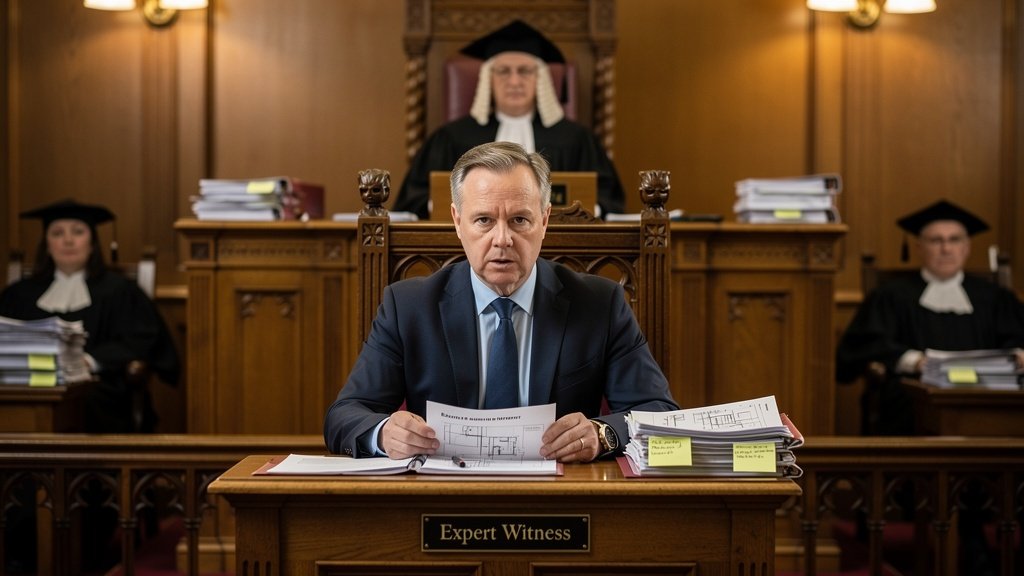
In housing disrepair litigation, the concept of the single joint expert (SJE) is one that solicitors encounter regularly — and one that tenants and landlords sometimes find confusing. What exactly is a single joint expert? Why would both parties agree to use the same expert? And how does it work in practice?
At Disrepair Claim Surveyors, our surveyors regularly act as single joint experts in housing disrepair cases across England and Wales. In this guide, we'll explain everything you need to know about the single joint expert process — from appointment to oral evidence.
What Is a Single Joint Expert?
A single joint expert is an expert witness who is appointed jointly by both parties in a legal dispute — in this case, a housing disrepair case — rather than each party appointing their own expert. The SJE carries out one inspection, produces one report and owes their duty to the court — not to either party individually.
The concept comes from Part 35 of the Civil Procedure Rules (CPR). Rule 35.7 gives courts the power to direct that evidence on a particular issue should be given by one expert only. In practice, courts frequently use this power in housing disrepair cases — particularly where the case is of moderate value and the cost of two competing experts would be disproportionate.
Why Are Single Joint Experts Used?
The SJE system was introduced to address a specific problem: the tendency of each side in a dispute to commission expert reports that support their own position. This "hired gun" approach led to lengthy battles between competing experts, increased costs and delayed justice.
The SJE system solves this by requiring both parties to agree on one genuinely impartial expert. Because the SJE owes no duty to either party and reports only to the court, their evidence is generally given more weight than that of a party-appointed expert. Courts also find it easier to reach a decision when there is one clear, neutral expert report to rely on.
How Is a Single Joint Expert Appointed?
The process typically works as follows:
- Court direction: The court makes an order or direction that expert evidence should be provided by a single joint expert.
- Agreement on the expert: Both parties — typically through their solicitors — agree on which expert to appoint. If they cannot agree, the court may select an expert from a list.
- Letter of instruction: A joint letter of instruction is prepared and agreed by both parties. This sets out the questions the expert is asked to address and the scope of the inspection.
- Inspection: The SJE attends the property and carries out a thorough inspection. Both parties may be present (or have representatives present) at the inspection.
- Report: The SJE produces a single report, addressed to the court. Both parties receive a copy of the report.
- Questions: Either party may submit written questions to the SJE about their report, within 28 days of receiving it.
- Oral evidence: If the case goes to a hearing, the SJE may be required to give oral evidence and be cross-examined by both sides.
Can a Single Joint Expert Be Challenged?
Yes — to an extent. Both parties can submit written questions to the SJE and can cross-examine them at a hearing if the case proceeds to trial. However, courts are generally reluctant to allow one party to effectively re-run the expert evidence by commissioning their own separate expert if an SJE has already been appointed.
In exceptional circumstances, a court may allow a party to call their own expert if the SJE's report is seriously flawed. But this is rare, and parties should not rely on it as a fallback position.
Advantages of the Single Joint Expert Approach
- Cost-effective: One expert fee instead of two — significant savings, particularly for lower-value cases.
- Faster resolution: One report to discuss, rather than two competing reports, speeds up the litigation process.
- Greater weight: Courts give more weight to genuinely impartial SJE evidence than to party-appointed expert reports.
- Encourages settlement: A clear, neutral expert report often leads parties to settle before trial.
"Acting as a single joint expert requires a particular kind of professionalism. You must be scrupulously fair, clear in your reasoning and genuinely independent. It's a role our surveyors take very seriously." — Disrepair Claim Surveyors
When Should a Single Joint Expert Be Used?
Courts and parties typically consider an SJE appointment in the following situations:
- Fast track cases (claims valued at £10,000–£25,000)
- Cases where the technical issues are relatively straightforward
- Cases where cost proportionality is a concern
- Cases where early resolution is desirable
In multi-track cases with complex or high-value disrepair issues, courts may allow each party to appoint their own expert. In these cases, our surveyors can be instructed as either the claimant's or the defendant's expert witness.
How Disrepair Claim Surveyors Handles SJE Appointments
We are familiar with all aspects of the SJE process. Our surveyors are experienced in receiving and responding to joint letters of instruction, carrying out joint inspections in the presence of both parties' representatives, producing clear and comprehensive reports that address all the questions put to us, and giving oral evidence in court. Contact us to discuss an SJE appointment.